What Your Cyber Insurer Is Really Asking When It Says 'Do You Have MFA?'

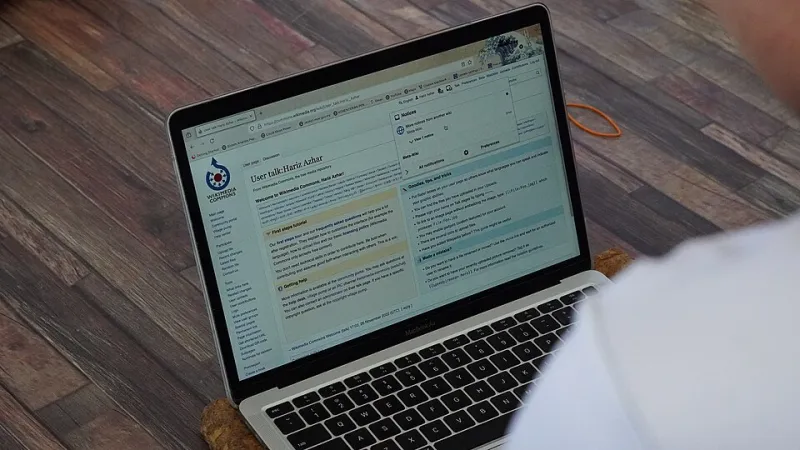
Photo: Francisclarke, CC BY-SA 4.0, via Wikimedia Commons
Your cyber insurance renewal arrives as a PDF, usually on a Friday, usually with a deadline. It has forty-odd questions, a few yes/no boxes, and a line at the bottom asking you to confirm that everything is accurate. Most SME owners skim it, tick 'yes' where things sound roughly right, and send it back.
That is understandable. It is also the moment when a lot of UK small businesses quietly write a cheque they cannot cash. Because the questionnaire is not really paperwork. It is the insurer asking: when something goes wrong, what will you be able to prove?
The form is a warranty in disguise
Under the Insurance Act 2015, you have a duty to make a fair presentation of the risk. In plain English: answer honestly, and do not leave out anything that would change the insurer's mind. If you say you have multi-factor authentication on email and you do not, that is not a small administrative slip. It is a misrepresentation, and it can affect how a claim is handled.
Insurers are not usually looking for reasons to wriggle out of paying. But they will ask for evidence when a claim is large, and 'we thought we did' is not evidence. The questionnaire is your chance to check what you can actually stand behind before you sign.
The four questions that do most of the work
Most cyber questionnaires circle the same four controls. They are not glamorous, but they are the ones that matter.
1. 'Do you enforce MFA on email and remote access?'
This is the big one. Insurers ask because email and remote access are how most ransomware and business email compromise starts. 'We have MFA available' is not the same as 'it is enforced for everyone'. If a member of staff can turn it off, or if the finance director's inbox is protected but the shared admin account is not, you have a gap.
Before you tick yes, check who is actually covered. Then check whether anyone has an exception — the managing director who finds it annoying, the old laptop that still logs in, the contractor account nobody owns.
2. 'Are backups taken regularly and tested?'
Insurers have heard 'we back up daily' from too many businesses that then discovered the backups were never restorable. The question behind the question is: can you get the business back within a sensible time, and can you prove it?
If you have never done a restore test, do one before renewal. Pick a file, restore it, time it. Better still, pick a whole system and see what breaks. A backup you have not tested is a hope, not a control.
3. 'Is admin access restricted to those who need it?'
If everyone in the business has local admin rights on their laptop, the answer is no. Insurers know that admin rights turn a small malware infection into a company-wide problem. They also know that removing admin rights is one of the cheapest fixes available.
You do not need a huge project. Start with the people who genuinely need admin access, give them separate admin accounts, and remove the rest. Then write down who has what.
4. 'Do you have an incident response plan?'
Many SMEs tick yes because they have a fire evacuation plan and a vague sense that someone would 'call IT'. That is not an incident response plan. An insurer wants to know: who do you call, who decides whether to pay a ransom, how do you notify the ICO within 72 hours if personal data is involved, and how do you tell customers?
A one-page plan with names, phone numbers, and a decision tree is enough to start. It does not need to be a binder.
Where honest answers go wrong
Overclaiming is the obvious risk. But there are quieter ways a questionnaire can undermine a claim.
Answering for the group when the question is about the entity. If your parent company has a security team but your UK trading company does not, say so. Insurers price and cover specific entities.
Confusing 'available' with 'enforced'. If MFA is switched on but not mandatory, it is available. That distinction matters.
Leaving out the awkward exception. The one server nobody patches, the shared password for the door system, the director's personal email used for invoicing. If it could affect the risk, disclose it or fix it.
Ticking 'yes' because you plan to do it next month. A plan is not a control. If you are mid-project, say that, and give a date.
How to use the form as a to-do list
Print the questionnaire. Go through it with whoever actually runs your IT — internal or external — and mark each answer as green, amber or red. Green means you can prove it. Amber means it is partly true or undocumented. Red means no.
Then prioritise in this order:
- MFA on email and remote access. If this is red, fix it first. It is the highest-value control for most SMEs.
- Tested backups. Do a restore test and write down the result. If it fails, you need to know before a claim, not after.
- Admin rights. Remove unnecessary admin access and document who still has it.
- A one-page incident plan. Names, numbers, insurer notification contact, ICO reporting process, and a decision on ransom payment.
- Logging and monitoring. Even basic logging helps you answer 'what happened and when' after an incident.
If you cannot tick yes to something, do not guess. Speak to your broker. Explain the gap, ask whether it affects cover, and ask what the insurer needs to see. Sometimes a remediation date is enough. Sometimes it changes the terms. Either way, you want to know before you sign, not when you are trying to recover from an attack.
The claim moment is the real test
When a claim happens, the insurer will ask for evidence. They may ask for a copy of your MFA policy, a backup log, a restore test record, or the incident plan. If those things do not exist, the questionnaire you signed becomes a problem.
So treat the renewal as a free security review with a hard deadline. It is not the most exciting document you will read this month, but it is one of the few that tells you exactly what a professional expects to see. Read it properly, fix what you can, and disclose what you cannot. That is how you keep the cover you are paying for.